I’ve been struggling with writers block. I have a lot of thoughts going around in my head yet when I come to write… nothing.
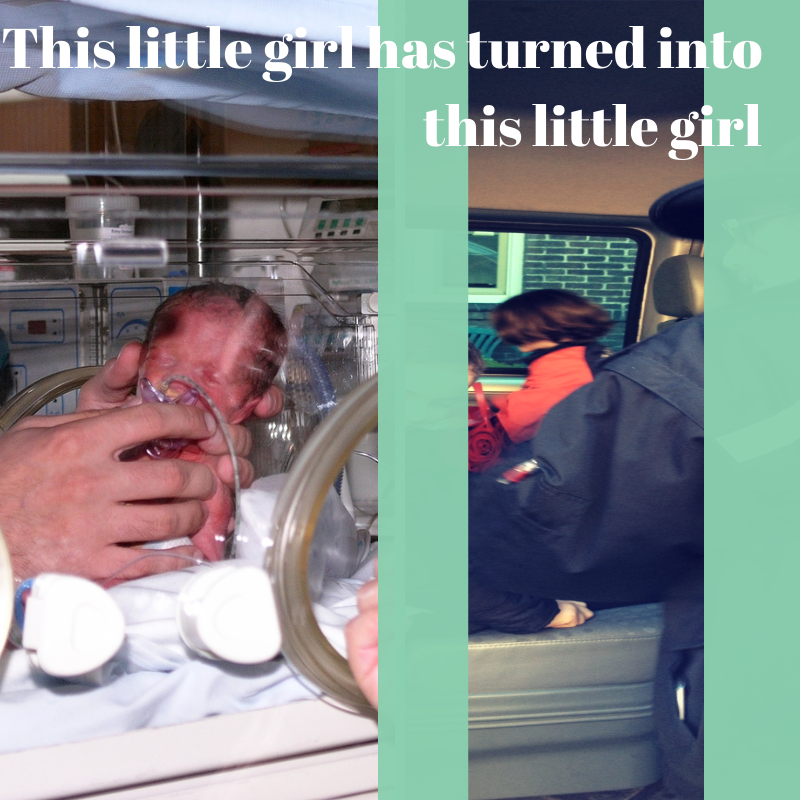
So although I never intend to share photos on this blog, these photos are just saying more than I can. I think they are vague enough that you cannot actually see her face as she is now, and that is important to me.
Despite her sometimes paralysing fear of new situations, F has gone off on a 3 day trip with school. There will not be any phone calls home and she is ok with that.
She came home from school yesterday and packed her own bag. Using the “things to bring” list from school, she adapted it for her needs (2 pjs are just not enough so she took 4).
She mumbled that they will probably try and wash her hair and that will be a problem (that’s for a post still be written)
This morning she told us that she was going to miss us and we hugged. She even gave me a kiss (she hates kisses).
Then she wheeled her suitcase out to the bus and off she went.
I’m in awe. So proud and just can’t get my head around this to even think about all the things I want to say. She’s 6 and a half.
I have written before about bringing up kids who are independent, make their own decisions, are self sufficient. It’s a good thing. Yet sometimes it’s not.
As other MoBs (mothers of bartterskids) know, we are also teaching our children how to manage their illness. This can involve life or death decisions.
We know that one day we need to let go and let them make their own choices. They need to strike out on their own, solve their own problems and not involve us in the process. We hope that when that time comes, we have done enough that they know how to make good choices for themselves.
Yet humans do not always make good choices. It is always at the back of my mind that one day F will stop taking her meds. This terrifies me and the for the sake of keeping her well, alive even, I could violate her right to choose and force it on her. But that only works short term and legal independence comes at the age of 18 and what do I do then? Or what happens when I am gone? I want her to look after herself so that means she has to do it. So I need to let her make her own decisions.
So what if she does something stupid and ends up in hospital? What if she hurts herself?
I do not know what I will do but it is inevitable that both my children will make choices I don’t agree with, do things that I think (and know) will hurt them.
This dilemma that we face drives me nuts – we want them to be independent but we want them to do what we say!
What do we do?
Whether your child is ill and doesn’t take their medicine or is in trouble and doesn’t accept the help that is offered; or you think their friends are bad for them or you just want their jeans to actually cover their butts (both girls and boys), this is what I have realised:
These lives are not ours. We are only guardians. Only they are the kings and queens of their lives. And a King or Queen is an absolute ruler.
So I hope that by preparing them for independence and, when they are almost ready, letting go, that they will rule their kingdom wisely. And if they don’t, give me the compassion to forgive myself for letting them choose.
My second hope is this: that when they have tried it on their own, made mistakes, given us grey hair (ok, in my case, more grey hair) let’s pray that it doesn’t take too long for them to realise that it’s ok to seek advice, that they don’t have to do it all alone. All rulers need an advisor. Let’s pray that our act of letting go makes it easy for them to turn to us when they need us.
So I’m going to keep doing those little things to prepare both my girls; get them to tidy up their own toys, let F administer her own meds, let S brush her own teeth. Then as they get bigger, let them do bigger things.
I hope that when the time comes, I can let them go (without giving them a long list of instructions of what not to do).
Dedicated to my parents who brought me up to be smart and gave me the freedom to make my own choices. Some have been brilliant and some have been spectacularly stupid. Thanks for praising the good and being there during the bad.
Ok, so after my impression of Homer Simpson’s “angry dad” last week I was able to chill out and get back to the positive psychology approach to getting kids to eat.
This week I practiced No. 8 Agreeing together what the rules are going to be. The heart of this is control. We gave her space and on Monday she asked if we could barbecue. It’s winter in Amsterdam and it was about 10C so of course we said yes. Hubs bought some meat (ok, this is not in line with “rule 1” but we didn’t have meat for a BBQ in the house. It’s winter!). The kids went outside with Hubs to make a fire and cook. We ate inside.
This is what she ate:
Butterfly lamb chop
Chicken drumstick (she got through half a drumstick)
Green beans
Sauces: piri piri, mayo and ketchup. Lots of it. (no photos, I’m not advertising here).
So how is it that last week eating was a problem and on Monday F had a feast?
Was she just being fussy? No.
Bartters is a rare illness and there is limited understanding of what it is actually like to live with it. Over the years I have talked to adults with it or with Gitlemans and I have come to understand a few things.
Your electrolytes go out of whack at any given moment: your potassium levels can drop when you get stressed, when you are active, when you play a lot, when you get hot … basically, when you do anything, your levels can drop. When this happens, you are dehydrated. You feel nauseous and don’t want to eat.
Everything you do uses potassium. It makes your muscles work. When you don’t have enough, your muscles don’t work as well. So sometimes even swallowing is difficult for F. There was a long time (more than 12 months) where she could chew the food but couldn’t swallow it. So you might want to eat but you can’t.
All those meds you take make you feel like crap, so you don’t want to eat.
Everyday there can be a number of reasons why you don’t want to eat or can’t. That’s why after all these years we still rely on medical nutrition (feeding tube people have you tried Peptisorb by Nutricia? It’s great. Here I will advertise. This dramatically improved quality of life for F and for us).
So Monday was a beautiful day. Her enjoyment of the juicy lamb was clear (it’s been months since she ate red meat) and she chatted all the way through about how delicious everything was.
You can’t imagine my joy at hearing her groan “ohh I’m full”.
I’m just going to savour this memory and stop right here.
The cause is related to her illness and it is reinforced by physical and psychological side effects of this chronic illness.
Not just a fussy eater but literally for years F hasn’t been able to consume more than about 20 kcal a day through eating or drinking, with sometimes months going by without food passing her lips.
This is changing, firstly with Haptotherapy and and now we have a program to encourage her eating which is based on creating opportunities and rewarding her with recognition when she eats. We do nothing when she doesn’t eat, except to say “ok, maybe next time”.
However, this last week I’ve been getting pissed off. Really pissed off. I make things I know she likes and she says “no”. I ask what she wants and she replies “I don’t know”. Sounds like a lot of kids, I know, but I lost it.
I got annoyed and told her I had had enough. We had words. We sat apart, brooding.
She saw my tears and she hugged me. Yes it should have been me that moved first but sometimes our children are just better people than we are.
There’s a fine line between giving space to let them feel free and encouraged to eat and being totally I ineffective letting them just mess about. Sometimes I get lost and don’t know where I am in relation to that line. That’s what this last week was about.
When I’m on the right side of the line, it’s great. Positive psychology to encourage her to eat really does work; her range has expanded greatly and quicker than we ever expected (hey, in our world, getting her to put a whole teaspoon of food in her mouth in one go after 6 years is speedy gonzales fast). And it’s without arguments over food (well apart from the one I mentioned earlier but that was my fault). There is no power struggle. Repeat, no power struggle.
This is what it looks like:
1. We are open to her needs without being slaves to them. For example, we try to have stuff she actually eats in the house. If we have run out we put it on the list for the next time we go shopping. Running out is not the end of the world for either of us.
2. Get her involved in cooking. She loves to chop stuff and sometimes she just uses her hands (mushrooms are super easy at any age). I try to keep something for her to cut and if I can’t do that, then she can put what I have cut up in a bowl before we transfer it to the pan. It is not really necessary but it gives her something to do (and I look like one of those TV chefs from the 80’s who has stuff ready in little dishes. The irony or my scornful question “who cooks like that?”)
3. Let her play with food. There is a reason babies and toddlers shove their hands in their food and smooth it around. They are trying to figure out what it is and what it feels like before they bring it into contact with a very sensitive part of their bodies – their mouths. F totally skipped that activity as a baby (it made her projectile vomit to see a banana let alone touch it) and it only kicked in when she was about 3 or 4 years old. So we let her use her hands, to just touch and explore and to eat. If this is something she needs to do before she can take the next step of taking a nibble, then it’s fine by me. (Restaurant behaviour is a bit different and she is ok with that, she knows why).
4. Patience. Patience. Patience. And a kind voice.
5. Give time for the choice to be made. I start early, especially with dinner as that seems to take the longest. It goes like this:
Me: What do you want for dinner later? we have X, Y, Z (hmm that’s a thought, maybe I should try alphabetti spaghetti. Do they still make that?)
F: I don’t know
Me: ok, think about it or have a look in kitchen. I’m going to start cooking later
As time passes and dinner is getting made, we go through this process a couple more times, with the “deadline” for choice making getting closer.
6. Seems like she can’t make a choice? I just make something, put it on her plate. She will either eat it or not. Quite often she will – isn’t it great when others make the choice for you? I mean, half of my conversations with my husband start with “what shall we have for dinner/lunch?” (hmm another date night is needed methinks).
7. Involve her in the shopping: making the list, picking the stuff up in the shop, pressing ok on the pin machine (she loves this) and putting the shopping away when we get home. Ok, that last one doesn’t happen very much but it’s on my wish list.
8. Agreeing together with her what the rules are going to be. Super duper important one here. My agenda is to get her to eat. Her agenda is to eat, it’s just seasoned with a bit of control, wanting to choose and the occasional urge to just say no.
These all work.
But sometimes I just want to be listened to. Not to discuss but to just say “here, eat this” and be obeyed.
I choose that word deliberately, obeyed. It has nothing to do with eating really and is more about being tired.
Bringing up kids, who can think; make a plan; negotiate; consider the consequences of their actions; be creative, is hard work. It demands the same things of us and sometimes, that leaves me tired and cranky.
So this last week the seed of doubt found it’s way into my mind. It said “she’s just messing with me. Am I stuck in the Princess and the Pea story here?”. So I took the short cut, raised my voice and told her to “just eat!” It would be so much easier to have a robot that would just do what I say! Sigh. Needless to say, it didn’t work.
But a robot would not have given me a hug after seeing my tears. That affection came from the independent human being who can think for herself, who can make her own choices and who was moved to hug me, knowing that it would bring me comfort.
Enders Game has been made into a film (Ender’s Game (2013) – IMDb) and I am not sure that I should go and see it.
I have read the book more than 30 times. There is something about the tragic irony that keeps me coming back to visit.
I love the book, I know it well and I have a vision of what the characters look like, how they talk, who they are.
So, like all other lovers of books, I ask myself do I want to see someone else’s interpretation of it?
My expectations will never be met. I can’t even articulate all the things I would want there to be in the film to make it “right”.
Yet I am curious to see what they did with it. What did they leave out? Did they change the end? Will they get into the deep issues? Or will I be disappointed when it turns out to be a hyped up “he’s the ONE” film like The Matrix?
Whatever happens when I watch the film, there are two themes of the book that are particularly close to heart at this point in my life:
Expectations for the future
Controlling behaviour – how to influence and get the behaviour you want from people. Sometimes, especially at bedtime, I wish I could control people, especially my kids.
Expectations
Growing up I had a vision of what my life would be like. Based on the wonderful example of my parents, I knew that my kids would be great: cheeky but obedient; responding to my brilliant parenting style; disciplined yet fun and loving.
The reality is nothing like this. Yes the elements are all there: I am loving, we have fun and use humour in a positive way and yes, there is discipline. Yet the shape and form of my life, how I am as a parent and what my children do… well, it’s not like the vision I had. The pictures don’t match.
For a start, when it comes to parenting, my husband and I don’t agree on everything (ok, this excellent opportunity for make up “activities” is not restricted to parenting. We disagree about a lot of things, but that’s for another day).
This is another way that the pictures don’t match:
Controlling behaviour
My children have a different interpretation of my parenting which I call “wilful misunderstanding”. They do not respond in the way I expect or hope for; they will not be controlled. They even dare to make their own choices and develop their own personalities. They do not listen to my wisdom and obey!
For example at bed time, my side of the conversation often goes like this:
“ok, another 5 minutes and then it’s time for bed” (yes super nanny, I listened to you and give them that time to adjust)
“come on then, brush your teeth and put your pyjamas on.” (imagine my firm and authoritative voice. Thank you mum, you showed me how that is done. That should work).
“Yes now!
good, you’ve brushed your teeth.
now get changed
Come on, get on with it!
…and without all that prancing about half naked!”
Quite some time later…… kids are in bed, books read, cuddles given.
“Ok, stop talking now. It’s time to sleep”.
Sigh.
Mum, where did I go wrong? Wasn’t I always a wonderful child that did as I was told? (ok, don’t answer that).
My expectation of parenting did not come true but it is sweeter than I ever imagined it to be. I did not know that the same face that could make my blood boil in an instant could also melt my heart two seconds later.
I still dream that my parenting will be brilliant; that my kids will grow up to be happy and able to look after themselves and others. I dream that I am helping save the future of mankind.
So ok, maybe this film will not melt my heart and I expect some changes to the story will boil my blood, but it is just a film. It is only someone else’s interpretation of a book and it will not meet my expectations. But maybe I will like it anyway. If I don’t? It’s ok, it’s not the end of the world.
When I started this blog I had intended to write about living with my daughter’s and my own chronic illnesses but something happened recently that is so enormously sad that I have been flitting between desperate, immense sorrow and numbness. It’s been 6 weeks and I have moved out of that now to a more dull place, where feelings are not so sharp.
When I got the news I pulled back from life, sank into myself. I was with my children all day but I could barely acknowledge their existence. It hurt to look at them so I didn’t.
Now I can look at my children again and it is with a bitter sweetness that I count my blessings.
Although it is still too raw for me to share in my blog I find I cannot stop thinking about the impact of tragedy, so I will write about mine. Time does heal and this healing in me makes writing this post possible.
In tragedy, in losing one person, it hurts so much that it is easy to lose the people around you too.
Our daughter almost died at birth and fought for her life for 5 weeks. For the next two years a cold would lead to a trip to the hospital and random life threatening fevers plagued our winters. We did not lose her but there is a lot of grief from this incredibly bumpy ride of “will she, wont she (die)?” and tragedy exists.
We each deal with our grief in our own way, often alone, and the distance between us grows.
Before you know it, years have gone by and you look at your husband and think “who are you?”
You see that they have the same look in their eyes. Two strangers who have shared so much, but not together.
Each walking their path alone, side by side, only looking inwards, never at each other because it hurts too much.
How do you find your way to each other again?
For us we followed the usual routine: spend some time together. We went out to dinner. We went for walks through Amsterdam, exploring new neighbourhoods and chatting. We had a nice time, we rested and it helped us get energy to face the next day with a smile but it didn’t really bring us closer together.
The real connecting happened when we talked about our experiences of our tragedy.
For example, my husband’s experience of the birth was very different to mine (apart from the obvious “he was not giving birth” one).
He was standing up watching a bunch of people cut me open.
I was lying on the table calmly, not feeling anything.
Oh yes, important detail: it was a cesarean, not just random butchery.
I had a wonderful view of the ceiling lights and was sheltered from the horror movie blood and guts (or should I say blood and uterus) by a green curtain. They don’t let you see your own cesarean and I’m really glad! It’s definitely not something I ever want to see.
So he told me what it was like for him to watch his wife and child in danger, not knowing what was going to happen.
We told each other our thoughts, hopes and fears. Each different, each equally real.
Something lit up between us. It’s like there is a thread holding us together which had become very fine and barely visible, fragile.
As we shared, the thread grew thicker, stronger. It started to glow as if sunshine and warmth were pulsing through it. I felt a warmth, connection, love that I had not felt for a long time.
Through sharing our tragedy with each other, through putting our experiences into words for the purpose of explaining to the other:
“this is what is was like for me”.
We connected again. No longer shift workers but friends, partners, husband and wife.



 amber rahim