amber rahim

Chronic illness: the parts we don't talk about


Leave a comment

The Art of Lego

The thing about chronic illness is that it never stops. At times it can feel like those drops of water that carve through rock. Sometimes it creates a stillness in me and words disappear. Silence. Kind of what I have wanted from my kids today (who doesn’t?).

I am also in the mood for some art this week so that’s what this post is about.  Cool art. I saw that there is an Expo starting in Amsterdam tomorrow, The Art of the Brick which is an exhibition of over 70 sculptures made from Lego.

While this is nothing compared to the amazing works of art my kids and I create together (with F usually designing and me usually being the “finder” of all those cool weird shaped but tiny pieces), there are some in the exhibition that are passable.

(And I bet the artist Nathan Sawaya didn’t need finder to dig through all the different colours and sizes for just the right piece. I bet he had them all delivered and sorted exactly how he wanted them. Yes, there is definitely an envious tone to this bit of my post. Lego hurts. When you are digging through that box and especially when stepped on).

Having googled and seen images I now have a dilemma.

A. Go the the expo with my kids and

  1. hope S doesn’t break off a piece so she can play
  2. give F grand ideas about what we can make when we get home


B. Stay at home and miss out.

What to do?

In the meantime, here are some that represent the kinds of creations I imagine my efforts produce (and may explain why I actually get upset when the kids break them apart after 3 days. Master pieces ruined!)

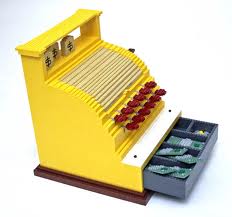
We actually had a real one of these in my parents’ shop:

lego till

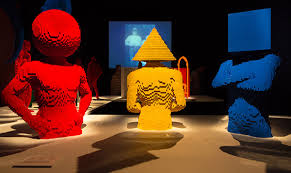
This is what I think F will want to make:

lego figures

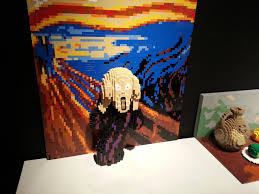
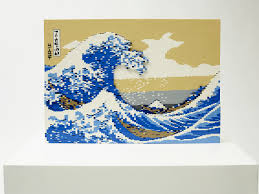
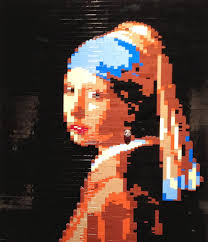
Some art that I just love. How did they do this with those little bricks?

Lego Scream

lego waves

lego girl with earring


2 Comments

Things we don’t talk about: PTSD and EMDR

So while on that cliff edge last week I remembered something: writing about the things we don’t normally talk about. I actually wrote this post awhile ago but somehow always skipped publishing it. It’s time now.

p.s. The shoes worked. Just thinking about them brings me back to that guiltless feeling and being on the brink is not so disorientating anymore.

PTSD, let’s talk

I don’t know where I am going with this.  I just read someone else’s blog and I got the urge to write about this.

As a woman in her 30’s, living in safe Holland, I was suprised to find out that I had PTSD.  Now what follows are not scientific or medical explanations, just the words that I have found to explain my experience.

I didn’t realise it for 3 years but looking back I can see that it was a time where I lived on adrenaline and with a constant sadness and fear that coloured everything in my life.

During my pregnancy, my daughter was diagnosed with a rare genetic kidney disorder that almost killed her in the first few weeks of life.

There were complications and basically I was keeping my legs crossed to delay the birth for as long as possible.  She was born at 30 weeks.

It was an emergency cesearean and once they had whipped her out they put her in an incubator and did a drive by so I could see her and then whisked her off.

I didn’t see her again for 24 hours.

I was pregnant one minute and then I wasn’t.  It was like she had died, which she almost did.

From the beginning I understood why I couldn’t see her, they had work to do.  They had to keep her heart beating, stop her dehydrating.  Hugs with mum had to wait.

After the first week I was able to see her everyday and then I had her at home so I knew, logically, that she was alive.

But something happened in the stress of that day.  I think it was too much for my mind and something got scrambled.

The normal process of filing got interupted – I mean, who has time to do the filing when all this is happening?

So my brain was unable to file the event and put it in the past

This is how I make sense of PTSD.

Things happen.  We experience them and then we file them into our memory storage.  We take them from ” this is happening” to “this happened”.

What happened to me was that the experience of my daughter dying stayed in the present, it never moved into the “this (didn’t) happen” category.

It stayed in the present so as a result I carried around the fear, sadness, adrenaline for 3 years.  No wonder I was on edge.

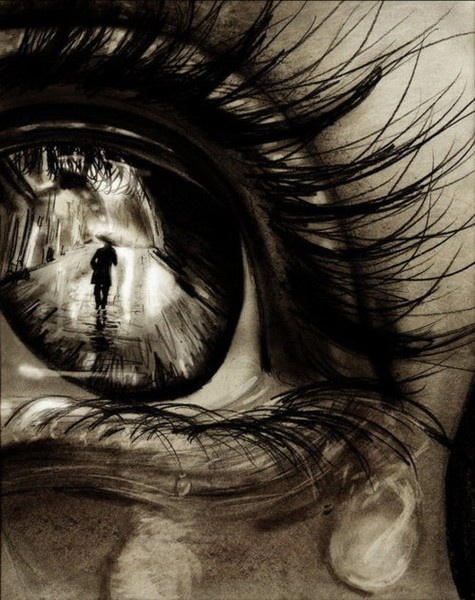
So where does EMDR fit in? This stands for Eye Movement Desensitization and Reprocessing.
image

Well, as a simple patient, this is what I understand from the doctor’s explanation.

EMDR helps move the experience from the “this is happening” stage to where they belong, the “this happened” stage.

By engaging both sides of the brain while re-living / talking through the experience, something happens and the brain is able to do the filing.  It’s like it says “what are you doing out here making a mess?  let’s get you put away”.

It works.  I don’t understand why following a light from left to right (or following a sound) has this effect but it does.  So thank you to whoever figured this out (wow you must have tried out some weird stuff to come up with this).

I didn’t know I had PTSD and it took a couple of months of therapy before even the therapist saw it.

So this is what I have learned:

you can hide it – even from yourself.

Getting treatment works.  It released me from the past so that I could go into the process of grief and dealing with it.

When something doesn’t feel quite right, pay attention.

I think I had a pretty mild case.  My heart goes out to those who have it, especially those who have suffered more than I have.



9 Comments

Why 13 hour TV marathons are ok in my house

As much as I agree that television and electronic gadget time should be limited, I find myself turning to that magic box, TV, on a regular basis.  You could say it saved my sanity on more than one occasion.

Take this weekend.  I let F do a 780 minute TV marathon on Sunday.

Why would I do such a thing? Well, have you ever read the “spoon theory“? Christine Miserandino explains the limitations that people with various chronic illnesses live with. It’s really good so if you haven’t read it yet click the link.

It was King’s Day in the Netherlands this weekend and on Friday all schools held the “King’s Games”. It’s a fantastic initiative to celebrate with sport. F loved it. She was really active all day at school and came home wanting to play outside until it was dark. On Saturday she was starting to wilt but was full of enthusiasm for picnics, playing and chinese roasted chicken (who doesn’t love this?) and although it was King’s Day we kept the activities light. But not light enough. It was difficult for us to have to rein in her fun and we didn’t do a very good job of it. Maybe she would be ok. How would we know what her boundaries were if we didn’t let her test them?

This is where the spoon theory comes in. She had used up all her spoons. In F’s case, her spoons are potassium (K) and sodium chloride (NaCl). Unlike the rest of us, her kidney’s don’t hold on to the K and NaCl so when she is active, she depletes the stores in her body, making her weak and nauseous.

She awoke at 3:30am on Sunday, unable to sleep and starting to vomit in a “normal for her when she is coming down with something or has overdone it” way. Despite holding her on my lap and being with her for an hour she couldn’t go back to sleep. I couldn’t stay awake without getting cranky so I told her she could play in bed but that I needed to go to sleep. Wise that she is, she let me go.

The TV marathon started at 8am and was only interrupted by bouts of vomiting and going to the loo.  The magic box did it’s work of distracting and entertaining and by the afternoon she perked up enough to nibble on crisps and raisins.

By 9pm, after hanging out on my bed for awhile (me reading, her still watching telly) I told her to close her eyes and go to sleep. My booked finished, I moved her to her own bed.

Yes there are better ways to distract and entertain even really sick kids but TV works for F.  Big plus: it is easy for me. Yes, yes, yes, I am a mum and I chose “easy” over “best for my child”.

I accept that I have double standards (I would never let S do this) but it came down to this: I was tired and I wanted something that would work.  So I make these choices that in isolation don’t look good. Ok, even in the big picture this one doesn’t look good (13 hours!). But it fulfilled a need – of F to rest, be entertained and be distracted from the nausea and for me to have an easy day. I guess I had used up my spoons too.


5 Comments

Writer’s block or silenced in awe?

I’ve been struggling with writers block. I have a lot of thoughts going around in my head yet when I come to write… nothing.

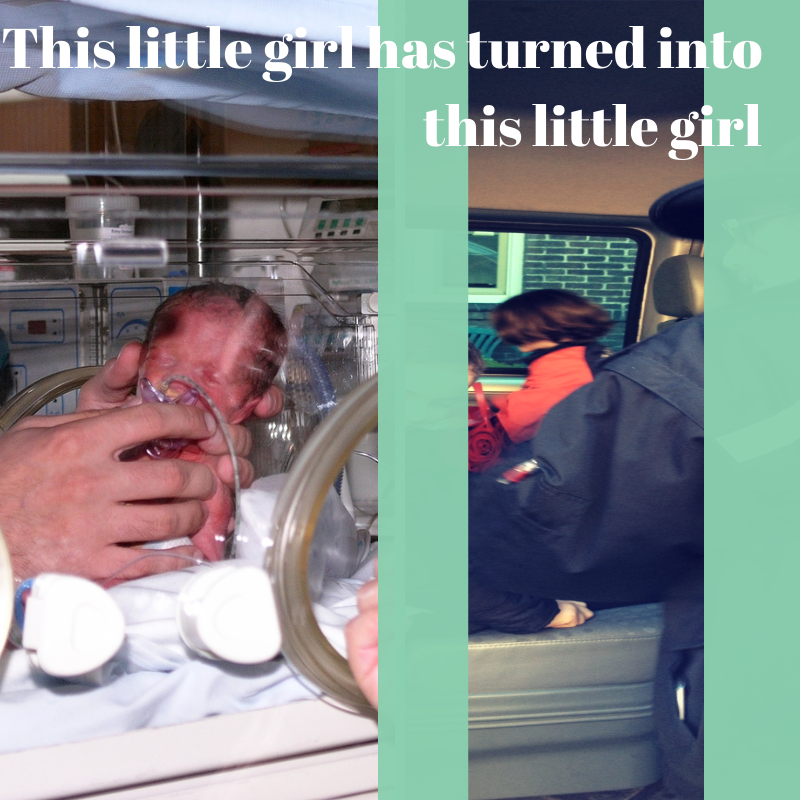
So although I never intend to share photos on this blog, these photos are just saying more than I can. I think they are vague enough that you cannot actually see her face as she is now, and that is important to me.

Despite her sometimes paralysing fear of new situations, F has gone off on a 3 day trip with school.  There will not be any phone calls home and she is ok with that.

She came home from school yesterday and packed her own bag.  Using the “things to bring” list from school, she adapted it for her needs (2 pjs are just not enough so she took 4).

She mumbled that they will probably try and wash her hair and that will be a problem (that’s for a post still be written)

This morning she told us that she was going to miss us and we hugged.  She even gave me a kiss (she hates kisses).

Then she wheeled her suitcase out to the bus and off she went.

I’m in awe. So proud and just can’t get my head around this to even think about all the things I want to say. She’s 6 and a half.

png-4


2 Comments

What’s different about chronic illness? No.2: Disturbance

On Tuesday evenings a nurse comes to our house to look after F so that J and I can go out. We mostly go together and sometimes we each go our own way with friends. You know, try to have a social life.

This Tuesday I came home to find her on her chair in her room, wrapped up in her quilt. Eyes closed. Disturbed. Her bed was wet and so the bedding was being changed.

I stepped into the room to help out and the only thing she said was “can I go back to bed?”

Every night around this time we get her out of bed to take her to the bathroom. Due to Bartters Syndrome she pees so much that, even with super absorbent night pants, we can’t keep her clothes or bed dry without this nightly trip out of bed (and sometimes not even then).

I often wonder what it is like for her, to never be able to sleep through the night undisturbed. Never.

I think I got a bit of an answer when I saw her there on the chair, eyes closed.

We delight in the beauty of the


12 Comments

The downside of bringing up independent kids

I have written before about bringing up kids who are independent, make their own decisions, are self sufficient. It’s a good thing. Yet sometimes it’s not.

As other MoBs (mothers of bartterskids) know, we are also teaching our children how to manage their illness. This can involve life or death decisions.

We know that one day we need to let go and let them make their own choices. They need to strike out on their own, solve their own problems and not involve us in the process. We hope that when that time comes, we have done enough that they know how to make good choices for themselves.

Yet humans do not always make good choices. It is always at the back of my mind that one day F will stop taking her meds. This terrifies me and the for the sake of keeping her well, alive even, I could violate her right to choose and force it on her. But that only works short term and legal independence comes at the age of 18 and what do I do then? Or what happens when I am gone? I want her to look after herself so that means she has to do it. So I need to let her make her own decisions.

So what if she does something stupid and ends up in hospital? What if she hurts herself?

I do not know what I will do but it is inevitable that both my children will make choices I don’t agree with, do things that I think (and know) will hurt them.

This dilemma that we face drives me nuts – we want them to be independent but we want them to do what we say!

What do we do?

Whether your child is ill and doesn’t take their medicine or is in trouble and doesn’t accept the help that is offered; or you think their friends are bad for them or you just want their jeans to actually cover their butts (both girls and boys), this is what I have realised:

These lives are not ours. We are only guardians. Only they are the kings and queens of their lives. And a King or Queen is an absolute ruler.

So I hope that by preparing them for independence and, when they are almost ready, letting go, that they will rule their kingdom wisely. And if they don’t, give me the compassion to forgive myself for letting them choose.

My second hope is this: that when they have tried it on their own, made mistakes, given us grey hair (ok, in my case, more grey hair) let’s pray that it doesn’t take too long for them to realise that it’s ok to seek advice, that they don’t have to do it all alone. All rulers need an advisor. Let’s pray that our act of letting go makes it easy for them to turn to us when they need us.

So I’m going to keep doing those little things to prepare both my girls; get them to tidy up their own toys, let F administer her own meds, let S brush her own teeth. Then as they get bigger, let them do bigger things.

I hope that when the time comes, I can let them go (without giving them a long list of instructions of what not to do).

Dedicated to my parents who brought me up to be smart and gave me the freedom to make my own choices. Some have been brilliant and some have been spectacularly stupid.  Thanks for praising the good and being there during the bad.